

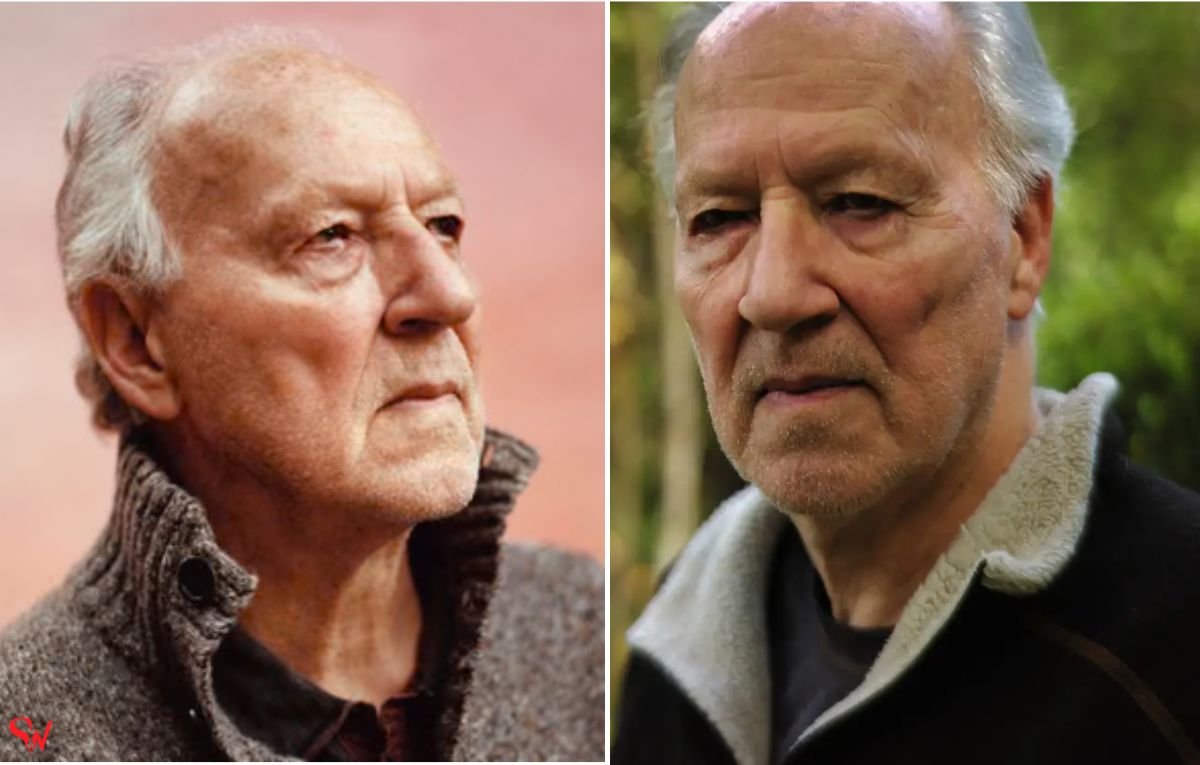
Werner Herzog is one of the most distinctive directors in modern cinema, known for films that place ambitious characters against extreme landscapes, difficult circumstances, and questions about human nature. From Aguirre, the Wrath of God and Fitzcarraldo to documentaries such as Grizzly Man and Cave of Forgotten Dreams, Herzog has built a career that crosses the boundaries between fiction and nonfiction.
Born in Munich in 1942, Herzog began making films as a teenager and quickly developed a reputation for pursuing unusual stories in challenging locations. Over more than six decades, he has worked as a director, screenwriter, producer, actor, author, and opera director. His official biography credits him with more than 60 feature and documentary films, while his broader body of work extends across cinema, literature, theater, and opera.
Herzog has also remained active well into his 80s. His 2026 feature Bucking Fastard premiered at the Venice Film Festival on September 3, 2026, demonstrating that the German filmmaker continues to explore new stories and forms of cinema.
Who Is Werner Herzog?
Werner Herzog is a German filmmaker whose career has been defined by an interest in extraordinary people, remote places, extreme situations, and the tension between human ambition and nature.
He became associated with the New German Cinema movement of the 1960s and 1970s, alongside filmmakers such as Wim Wenders, Rainer Werner Fassbinder, Volker Schlöndorff, Edgar Reitz, and Werner Schroeter. Herzog, however, maintained an independent identity and did not consider himself fully part of any single filmmaking school.
His work is difficult to place in one category. Some of his films are conventional narrative features, while others are documentaries that use unusual structures, dramatic narration, carefully composed imagery, and philosophical questions. Herzog has described his approach to documentary filmmaking through the idea of an “ecstatic truth,” emphasizing that filmmaking can seek a deeper understanding beyond a simple collection of facts.
That distinctive approach has made the Werner Herzog director name synonymous with adventurous filmmaking and an unmistakable cinematic voice.
Early Life and Childhood
Werner Herzog was born on September 5, 1942, in Munich, Germany. His mother, Elisabeth, took him and his brother away from Munich during the Allied bombing campaign when Herzog was still an infant. The family eventually settled in Sachrang, a remote village in Bavaria near the Austrian border.
Herzog’s childhood was modest. His official biography describes a home without running water and a rural environment where he had considerable freedom to explore the surrounding mountains. He attended a small local school before his family moved back to Munich when he was 12.
He later attended a humanistic high school, where he studied subjects including Greek and Latin. His interest in filmmaking developed unusually early. Herzog has said that he saw his first film at the age of 11 when a traveling projectionist visited his village, although the experience did not immediately convince him that cinema was magical.
As a teenager, Herzog decided he wanted to become a filmmaker. He took various jobs to finance his early projects and developed a strong interest in travel. His youth included extensive hitchhiking across Europe and journeys through Greece and North Africa. These experiences helped shape the fascination with remote landscapes and unconventional lives that later became central to his films.
Education and First Films
Herzog studied history and German literature in Munich and also spent a short period at the University of Pittsburgh. He did not complete a conventional university degree, choosing instead to concentrate on filmmaking.
His first short film, Herakles, was released in 1962. He followed it with additional short projects while continuing to find ways to finance his filmmaking independently.
His first feature film, Signs of Life, emerged from a screenplay that had won the Carl Mayer Prize. Shot on the Greek island of Kos, the film follows a wounded German soldier whose isolation gradually turns into psychological instability.
Signs of Life established Herzog as a serious young filmmaker. It screened at the Berlin International Film Festival in 1968 and won a Silver Bear Special Jury Prize for Best First Feature. The film also received a German Film Award.
Werner Herzog Director: Breakthrough With Aguirre, the Wrath of God
Herzog’s international reputation expanded dramatically with Aguirre, the Wrath of God, released in 1972.
The film follows a group of Spanish explorers searching for the legendary El Dorado. Instead of presenting the expedition as a straightforward adventure, Herzog turns it into a disturbing examination of obsession, power, isolation, and psychological collapse.
Klaus Kinski plays the central role of Don Lope de Aguirre. The performance became one of the defining collaborations between Herzog and Kinski, whose intense personality and unpredictable working relationship with the director later became the subject of Herzog’s documentary My Best Fiend.
The production also established a pattern that would appear throughout Herzog’s career: placing fictional stories in imposing natural environments and allowing those environments to become part of the drama.
The Enigma of Kaspar Hauser
Herzog followed Aguirre with several important projects, including The Enigma of Kaspar Hauser, released in 1974.
The film tells the story of Kaspar Hauser, a mysterious young man who appears in 19th-century Germany after spending most of his life isolated from society.
The film received major recognition at the Cannes Film Festival in 1975. Herzog won the Grand Prix, while the film also received the International Critics’ Prize.
The story allowed Herzog to explore themes that would recur in his later work: alienation, civilization, identity, and the complicated relationship between individuals and the societies surrounding them.
Nosferatu and the Rise of Fitzcarraldo
In 1979, Herzog released Nosferatu the Vampyre, his atmospheric reinterpretation of the classic vampire story. Klaus Kinski again appeared in the lead role, with Isabelle Adjani and Bruno Ganz among the principal cast.
Another major film followed soon afterward: Fitzcarraldo.
Released in 1982, Fitzcarraldo tells the story of Brian Sweeney Fitzgerald, an eccentric man determined to bring grand opera to the Peruvian jungle. His ambitious plan requires an enormous steamship to be transported over a hill between two river systems.
The production became legendary because Herzog pursued an extraordinarily difficult physical production rather than relying entirely on conventional cinematic shortcuts. The film took years to complete and went through major casting changes before Klaus Kinski and Claudia Cardinale took the principal roles.
The effort paid off artistically. At the 1982 Cannes Film Festival, Herzog won the Best Director award for Fitzcarraldo.
The production was later documented in Les Blank’s Burden of Dreams, giving audiences an unusually close look at Herzog’s filmmaking process.
Herzog and Klaus Kinski
The relationship between Werner Herzog and Klaus Kinski is one of the most famous director-actor partnerships in international cinema.
They worked together on five films, including Aguirre, the Wrath of God, Woyzeck, Nosferatu the Vampyre, Fitzcarraldo, and Cobra Verde. Their collaborations produced memorable performances but were also marked by serious tensions during production.
Herzog later examined the relationship in My Best Fiend, released in 1999. Rather than presenting their partnership as a simple friendship or rivalry, the documentary explores the complicated combination of admiration, conflict, artistic dependence, and personal history between the two men.
Kinski died in 1991, making My Best Fiend an important retrospective on one of the most turbulent creative relationships in Herzog’s career.
Herzog’s Move Toward Documentary Filmmaking
Although Herzog continued making fiction films, documentaries became increasingly important to his career.
His documentary Lessons of Darkness, released in 1992, used images of the burning oil fields of Kuwait after the Gulf War to create a haunting portrait of a landscape transformed by conflict. The film was controversial partly because of its highly stylized approach to the destruction it depicted.
Herzog then made a series of documentaries centered on remarkable individuals and experiences.
Little Dieter Needs to Fly focused on Dieter Dengler, a German-born American pilot who was shot down during the Vietnam War and held captive before escaping. Wings of Hope examined the story of Juliane Koepcke, who survived a plane crash in the Peruvian rainforest as a teenager.
These films demonstrated Herzog’s ability to turn real events into deeply personal cinematic experiences.
Grizzly Man and a New Generation of Audiences
One of Herzog’s best-known documentaries is Grizzly Man, released in 2005.
The film examines the life of Timothy Treadwell, an environmentalist who spent years living among wild bears in Alaska. Rather than simply recounting Treadwell’s story, Herzog uses his footage and interviews to explore the complicated relationship between humans and the natural world.
Grizzly Man became one of Herzog’s most widely recognized documentary works and helped introduce his filmmaking style to a new generation of viewers.
Herzog continued his documentary work with films including Encounters at the End of the World, Cave of Forgotten Dreams, Into the Abyss, Into the Inferno, and Fireball: Visitors from Darker Worlds. His official filmography identifies Encounters at the End of the World as an Oscar-nominated documentary.
Cave of Forgotten Dreams
Released in 2010, Cave of Forgotten Dreams took Herzog into the Chauvet Cave in southern France, where prehistoric paintings provide a remarkable record of early human artistic expression.
The film was shot in 3D and brought the cave’s ancient artwork to a broad international audience. Herzog’s interest went beyond archaeology. As with many of his documentaries, he used the subject to consider larger questions about human creativity, time, memory, and our relationship with the natural world.
Later Fiction Films
Herzog did not abandon narrative cinema.
His later feature work includes Invincible (2001), Rescue Dawn (2006), Bad Lieutenant: Port of Call New Orleans (2009), My Son, My Son, What Have Ye Done (2009), Queen of the Desert (2015), Salt and Fire (2016), and Family Romance, LLC (2019).
Rescue Dawn returned to the story of Dieter Dengler in fictionalized form, while Bad Lieutenant: Port of Call New Orleans demonstrated Herzog’s willingness to work within a more conventional crime-film framework while retaining his distinctive sensibility.
Family Romance, LLC, which screened at Cannes in 2019, was another unusual project. The film examines a company that rents actors to play substitute family members and social companions, blurring the boundaries between performance and real life.
Herzog as an Actor
Werner Herzog is also recognizable to audiences who may not have seen his films as a director.
He has appeared as an actor in projects including Jack Reacher, in which he played the villain known as the Zec. He also appeared in The Mandalorian as the Client during the show’s first season. His acting credits also include appearances in The Simpsons, Rick and Morty, and other films and television projects.
His distinctive German-accented English and measured delivery have made his voice particularly recognizable. That voice has also become an important part of his documentary narration.
Personal Life, Wife, and Children
Herzog has generally kept aspects of his private life away from the center of his public career, although some family details have been reported over the years.
He was married to Martje Grohmann in 1967, and they later divorced in 1987. Herzog has three children. His first son, Rudolph, was born in 1973. He also has a daughter, Hanna, and a younger son, Simon.
Herzog married his third wife, Lena, in 1999. Lena is a visual artist and photographer who has worked on projects connected with Herzog’s productions. The couple has lived in Los Angeles, and Herzog has continued to divide his professional life between filmmaking, writing, teaching, and other creative work.
Physical Appearance and Public Image
Herzog is recognizable for his distinctive voice, silver hair, composed manner, and often intense expression. His public image has developed alongside his filmmaking career, particularly because he frequently appears in interviews, documentaries, festivals, and his own films.
His physical presence has also become part of his wider cultural identity. Herzog’s appearances in Jack Reacher and The Mandalorian introduced him to viewers who may know him primarily as an actor rather than as a director.
Rather than focusing on a specific height or other numerical physical measurements that are inconsistently reported, it is more useful to recognize Herzog by the distinctive voice and demeanor that have become closely associated with his work.
Werner Herzog’s Net Worth
A precise, independently verified figure for Werner Herzog’s net worth is not established through reliable public financial reporting.
Because estimates published online can differ substantially and often lack transparent sourcing, a specific dollar figure would risk presenting speculation as fact. Herzog’s income has come from a long career spanning film directing, producing, writing, acting, television, opera, and other creative work, but the exact value of his personal assets is private.
Awards and Major Recognition
Herzog has received major recognition throughout his career.
Among his most significant honors are the Silver Bear Special Jury Prize for Signs of Life at the 1968 Berlin International Film Festival, the Grand Prix at Cannes for The Enigma of Kaspar Hauser in 1975, and the Best Director award at Cannes for Fitzcarraldo in 1982.
His documentaries have also earned substantial recognition. Encounters at the End of the World received an Academy Award nomination, while his body of work has been honored by documentary and film institutions internationally. In 2022, he received an Honorary Lifetime Achievement Award from the German Documentary Film Prize.
Werner Herzog’s Work Beyond Film
Cinema is only one part of Herzog’s creative career.
He has published numerous books, including memoirs, fiction, screenplays, and works connected with his filmmaking. He has also directed operas and staged productions around the world. His official biography states that he has directed more than two dozen operas.
Herzog’s 2021 novel The Twilight World expanded his literary work into fiction. His memoir Every Man for Himself and God Against All offered another perspective on the experiences that shaped his filmmaking career.
He has also taught aspiring filmmakers through the Rogue Film School, an unconventional educational project built around practical experience and Herzog’s own philosophy of filmmaking.
Interesting Facts About Werner Herzog
- He began making films as a teenager. Herzog made his first short, Herakles, when he was still very young, and his filmmaking career developed from there.
- He grew up without running water. His childhood in a remote Bavarian village was far removed from the modern urban environment where he later built his international career.
- He won Best Director at Cannes for Fitzcarraldo. The award recognized one of the most ambitious productions of his career.
- He has directed both films and operas. His creative work extends beyond cinema into stage production and music.
- He has a substantial acting career. His roles include the Zec in Jack Reacher and the Client in The Mandalorian.
- His work crosses fiction and documentary. Films such as Grizzly Man and Cave of Forgotten Dreams show how his documentaries can carry the visual and philosophical ambition of narrative cinema.
- He remains active as a filmmaker. His 2026 film Bucking Fastard premiered at the Venice Film Festival, adding another feature to an already extensive body of work.
Frequently Asked Questions
Who is Werner Herzog?
Werner Herzog is a German filmmaker, screenwriter, producer, actor, and author best known for films such as Aguirre, the Wrath of God, Fitzcarraldo, Grizzly Man, and Cave of Forgotten Dreams.
What is Werner Herzog famous for?
Herzog is famous for his distinctive filmmaking style, unusual subjects, difficult locations, philosophical documentaries, and collaborations with actors such as Klaus Kinski. His films often examine ambition, isolation, nature, obsession, and human behavior.
What is Werner Herzog’s most famous movie?
There is no single universally accepted answer, but Aguirre, the Wrath of God, Fitzcarraldo, and Grizzly Man are among the films most closely associated with his reputation. Fitzcarraldo also earned Herzog the Best Director award at the 1982 Cannes Film Festival.
Did Werner Herzog work with Klaus Kinski?
Yes. Herzog and Klaus Kinski collaborated on five films, including Aguirre, the Wrath of God, Woyzeck, Nosferatu the Vampyre, Fitzcarraldo, and Cobra Verde. Their volatile creative relationship later became the focus of Herzog’s documentary My Best Fiend.
Is Werner Herzog still making films?
Yes. Herzog has remained active as a filmmaker, actor, author, and creative artist. His 2026 feature Bucking Fastard premiered at the Venice Film Festival on September 3, 2026.
Does Werner Herzog act?
Yes. Herzog has appeared in numerous films and television productions. His better-known acting roles include the Zec in Jack Reacher and the Client in The Mandalorian. He has also provided voice performances for animated productions.
Where does Werner Herzog live?
Herzog has maintained ties to both Germany and the United States. His official biography lists Munich and Los Angeles as places where he lives, while interviews over the years have documented his long association with Los Angeles.
Conclusion
Werner Herzog’s career stands apart because he has never confined himself to one kind of filmmaking. The Werner Herzog director story stretches from the small Bavarian village where he grew up to major international film festivals, remote jungles, Antarctic landscapes, prehistoric caves, opera stages, television productions, and Hollywood films.
His most enduring work often places determined individuals against forces larger than themselves. Sometimes those forces are nature or geography; in other films, they are obsession, isolation, society, or the limits of human ambition.
From Aguirre, the Wrath of God and Fitzcarraldo to Grizzly Man and Cave of Forgotten Dreams, Herzog has developed a body of work that remains immediately recognizable while continually changing direction. His continued filmmaking into his 80s, including the 2026 premiere of Bucking Fastard, shows that his creative career is still evolving rather than simply being remembered as a chapter in film history.
