

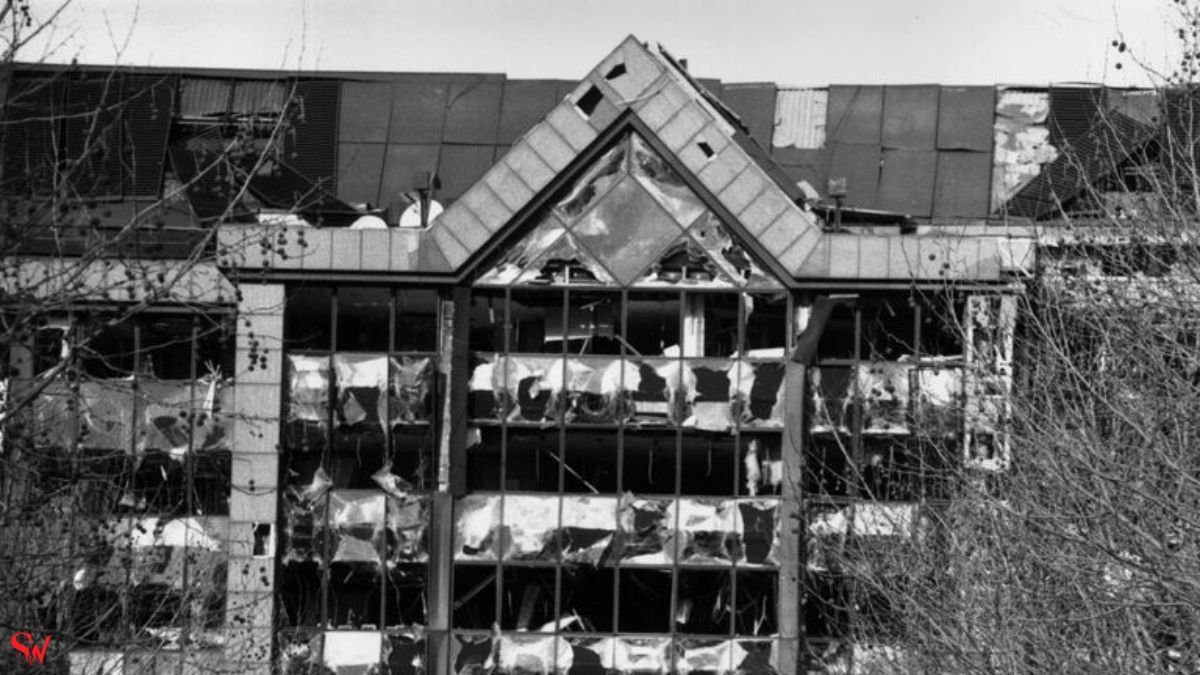
The Canary Wharf bombing was a major terrorist attack carried out by the Provisional Irish Republican Army (IRA) on February 9, 1996, in London’s Docklands. A large truck bomb exploded near South Quay station, close to Canary Wharf, killing two people and injuring dozens more. The blast also caused more than £100 million in damage across the area.
The attack became one of the defining moments of the Troubles in Britain during the 1990s. It ended the IRA’s 17-month ceasefire and dealt a serious blow to efforts to advance the Northern Ireland peace process. Yet the political process continued, eventually contributing to the negotiations that led to the Good Friday Agreement in 1998.
What Was the Canary Wharf Bombing?
The Canary Wharf bombing took place on Friday, February 9, 1996, in the South Quay area of the Isle of Dogs in London’s Docklands.
The bomb was concealed in a lorry parked close to South Quay station on the Docklands Light Railway. At approximately 7 p.m., the device exploded, producing a powerful blast that damaged buildings throughout the surrounding commercial district.
The IRA had made telephone warnings before the explosion. Parliament later recorded that warning calls were made at around 5:45 p.m., giving authorities roughly 90 minutes before the bomb detonated.
Despite the warnings, the area was not fully evacuated in time. Two men who were working at a nearby newsagent were killed.
The attack was particularly significant because it occurred in one of London’s rapidly developing financial districts. Canary Wharf had become an important symbol of London’s commercial growth, with major businesses occupying the area’s high-rise buildings.
When Did the Canary Wharf Bombing Happen?
The bombing happened on February 9, 1996.
The explosion occurred shortly after 7 p.m. Contemporary and later parliamentary accounts place the detonation at about 7:01 p.m., although some contemporary reports gave a slightly earlier time.
The timing was significant because the IRA had announced earlier that day that it was ending its ceasefire. The attack therefore represented a return to large-scale bombing in Britain after a prolonged period without mainland attacks of this kind.
Prime Minister John Major told the House of Commons on February 12 that the IRA had admitted responsibility for the bombing on February 10 and that the attack followed the IRA’s announcement ending the cessation of hostilities.
Why Did the IRA Bomb Canary Wharf?
The bombing occurred during a difficult stage of the Northern Ireland peace process.
The IRA had declared a ceasefire in August 1994. That cessation of hostilities created an opportunity for political negotiations involving the British and Irish governments and Northern Irish parties.
By early 1996, however, disagreements over the conditions for Sinn Féin’s participation in negotiations had created a serious impasse. The British government maintained that the decommissioning of paramilitary weapons was an important issue before full political talks could proceed.
The IRA ended its ceasefire on February 9, 1996. The Canary Wharf bombing followed shortly afterward. The British and Irish governments condemned the attack and made clear that political dialogue with Sinn Féin would not resume until the ceasefire was restored.
The bombing therefore had both a human cost and a major political consequence. It demonstrated that the conflict could return to Britain’s mainland even while diplomatic efforts were underway.
Who Were the Victims of the Canary Wharf Bombing?
Two people died in the Canary Wharf bombing: Inam Bashir and John Jeffries.
Bashir, aged 29, worked as a newsagent, while Jeffries, aged 31, was his assistant. Both were inside or near the newsagent when the explosion occurred. The force of the blast killed them.
Their deaths became a central part of the tragedy surrounding the attack. They were not political figures or participants in the Northern Ireland conflict. They were civilians caught in the explosion while working in the area.
Parliament later recorded that 39 people were injured, with some suffering permanent injuries. Other contemporary reports described more than 100 people as injured or treated for injuries, reflecting differences in how casualties were counted.
Most injuries resulted from the force of the explosion and flying glass from nearby buildings.
How Much Damage Did the Bomb Cause?
The physical damage was extensive.
The blast severely damaged buildings around South Quay and affected offices, shops and transport infrastructure. Windows were shattered over a wide area, while parts of nearby buildings suffered structural damage.
The financial cost was estimated at more than £100 million. Some later estimates placed the total closer to £150 million, depending on what was included in the calculation.
The explosion also demonstrated how vulnerable a densely developed commercial district could be to a large vehicle bomb.
Canary Wharf itself was shaken by the blast, and the surrounding financial district experienced widespread disruption. The scale of the damage was particularly striking because the Docklands had become one of London’s most important centers for banking, business and commerce.
The Warnings Before the Explosion
One of the most consequential aspects of the bombing was the series of warnings issued before the device detonated.
Police received warning calls in the late afternoon. The calls were connected to the IRA and contained information intended to alert authorities to the presence of the bomb. Parliament later recorded that the first warnings came at around 5:45 p.m.
The warnings created a difficult emergency situation. Authorities had to determine the precise location and credibility of the threat while trying to clear a busy area.
A later parliamentary account stated that the bomb exploded about 90 minutes after coded warnings were telephoned to media organizations in Dublin and Belfast.
The fact that warnings had been given did not prevent deaths. Bashir and Jeffries remained near the blast site and were killed when the bomb exploded.
The episode became an important example of the challenges faced by police and emergency services when dealing with terrorist warnings in a crowded urban environment.
The Canary Wharf Bombing and the IRA Ceasefire
The bombing effectively ended the IRA’s 17-month ceasefire.
The ceasefire had begun in August 1994 and represented one of the most important developments in the early stages of the modern Northern Ireland peace process. It had created hope that political negotiations could replace armed conflict.
The Canary Wharf attack abruptly changed that atmosphere.
In the House of Commons, John Major described the bombing as the work of the IRA and discussed its implications for the peace process. He also stated that negotiations with Sinn Féin could not proceed while violence continued.
The British and Irish governments subsequently worked to maintain a political route forward. On February 28, Major and Irish Taoiseach John Bruton agreed on a framework for continuing consultations with Northern Irish parties.
This was important because the bombing did not permanently destroy the peace process. Instead, it became a major setback within a process that continued through the following years.
The Political Impact of the Bombing
The Canary Wharf bombing had an immediate political impact in Britain and Ireland.
The attack increased pressure on governments to respond firmly to renewed violence while also preserving the possibility of negotiations. John Major’s government rejected the idea that terrorism would determine the political future of Northern Ireland.
At the same time, the British and Irish governments continued working toward all-party talks.
A 1996 parliamentary research paper noted that the February bombing ended the IRA ceasefire and that further bombs were discovered in London in the weeks that followed. The two governments refused to meet Sinn Féin until a new ceasefire was established.
The political process eventually moved forward despite the setback. The all-party talks opened later in 1996, and the wider peace negotiations continued into 1997 and 1998.
The Good Friday Agreement was ultimately signed in April 1998, providing a political framework for Northern Ireland and becoming the landmark settlement associated with the end of the Troubles’ most intense period of conflict.
Who Was Responsible for the Canary Wharf Bombing?
The Provisional IRA claimed responsibility for the bombing.
The British government identified the IRA as responsible shortly after the attack, and the IRA admitted responsibility on February 10, 1996.
The subsequent criminal investigation focused on individuals involved in preparing and transporting the bomb.
James McArdle was later convicted of conspiracy to cause an explosion in connection with the Docklands bombing. His trial took place at Woolwich Crown Court in 1998. Contemporary reporting stated that the jury found him guilty of conspiracy, while murder charges were treated separately during the proceedings.
The investigation demonstrated the complexity of prosecuting people involved in an organized terrorist operation, particularly when the bombing was planned across different locations.
The Investigation and Criminal Case
Investigators spent considerable time examining the vehicles, materials and other evidence connected with the bombing.
The investigation eventually linked James McArdle to the operation. Evidence presented during the trial included fingerprints and other material associated with the bomb plot.
In June 1998, McArdle was convicted of conspiracy to cause an explosion. The case was significant because it resulted in a criminal conviction connected directly to one of the most consequential IRA attacks of the 1990s.
The legal proceedings also brought renewed attention to the two men who had died and to the people injured in the explosion.
The Canary Wharf Bombing and Later Compensation Efforts
The consequences of the bombing continued long after the physical damage was repaired.
Victims and families faced injuries, financial losses and long-term effects from the attack. Two decades later, the issue of compensation was still being raised in Parliament.
During a 2016 Westminster Hall debate marking the 20th anniversary, MPs discussed compensation for people affected by the Docklands bombing. The government acknowledged the deaths, injuries and continuing importance of the issue to victims.
The debate illustrated that the effects of terrorism can continue for decades after an explosion has disappeared from the headlines.
How the Canary Wharf Area Recovered
The Docklands continued to develop after the bombing.
Buildings damaged in the explosion were repaired or rebuilt, while Canary Wharf went on to become one of Europe’s most prominent financial and commercial districts.
The attack therefore became part of the area’s history rather than the event that defined its future.
The South Quay location also continued to operate as part of London’s expanding transport and business network. The recovery demonstrated the resilience of the local community and the wider city.
Interesting Facts About the Canary Wharf Bombing
1. It happened after a 17-month IRA ceasefire
The bombing marked the end of the IRA’s 17-month ceasefire, making it a major turning point in the Northern Ireland peace process.
2. Two civilians were killed
Inam Bashir and John Jeffries died in the explosion. Both were working at a nearby newsagent when the bomb detonated.
3. Warnings were issued before the blast
Authorities received bomb warnings before the explosion, but the evacuation was not sufficient to prevent deaths and injuries.
4. The financial damage was enormous
The bombing caused more than £100 million in damage, making it one of the costliest terrorist attacks in Britain at the time.
5. The attack did not end the peace process
Although the bombing caused a major setback, the British and Irish governments continued diplomatic efforts. All-party negotiations proceeded later in 1996, and the wider peace process eventually produced the Good Friday Agreement in 1998.
6. The consequences lasted for decades
Victims and campaigners continued to raise questions about compensation many years after the bombing. Parliament debated the issue again on its 20th anniversary in 2016.
FAQs
What was the Canary Wharf bombing?
The Canary Wharf bombing was an IRA truck-bomb attack carried out near South Quay in London’s Docklands on February 9, 1996. It killed two people, injured others and caused more than £100 million in damage.
When did the Canary Wharf bombing happen?
The bombing happened on February 9, 1996. The device exploded at approximately 7 p.m. near South Quay station.
Who carried out the Canary Wharf bombing?
The Provisional IRA carried out the attack and admitted responsibility the following day.
Who died in the Canary Wharf bombing?
The two people killed were Inam Bashir, aged 29, and John Jeffries, aged 31. They were working at a nearby newsagent when the bomb exploded.
How many people were injured?
Official and contemporary accounts vary depending on how injuries were counted. Parliament later recorded 39 injured people, while other reports described more than 100 people as injured or treated after the explosion.
Did the bombing end the Northern Ireland peace process?
No. It seriously disrupted the process and ended the IRA ceasefire, but the British and Irish governments continued pursuing political negotiations. The peace process eventually led to the Good Friday Agreement in 1998.
Was anyone convicted for the bombing?
James McArdle was convicted in 1998 of conspiracy to cause an explosion connected with the Docklands bombing.
Conclusion
The Canary Wharf bombing remains a significant event in the history of London’s Docklands and the Northern Ireland peace process. On February 9, 1996, an IRA truck bomb killed Inam Bashir and John Jeffries, injured many others and caused more than £100 million in damage.
Its significance went beyond the physical destruction. The attack ended the IRA’s 17-month ceasefire and exposed the fragility of the political negotiations taking place at the time. Yet the peace process survived the setback.
Canary Wharf subsequently continued its transformation into a major international business district. The bombing is remembered not only for the destruction it caused, but also for the lives lost and the wider political consequences that followed.
